




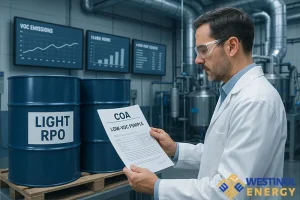


Operational Efficiency & Cost Optimization in Industrial Supply Chains
How Base Oil and Rubber Process Oil Drive Smarter Global Purchasing Decisions
Introduction: Why Operational Efficiency Is No Longer Optional
In today’s highly competitive global industrial market, operational efficiency and cost optimization are no longer internal concerns limited to factories or production lines. For export buyers and international customers, efficiency starts much earlier — at the point of raw material selection.
Rising energy costs, volatile logistics markets, strict quality expectations, and margin pressure are forcing buyers to rethink how they source base oil and rubber process oil. The right choice can significantly reduce production costs, improve consistency, and strengthen long-term supply reliability.
This article explores how strategic sourcing of base oil and rubber process oil directly impacts operational efficiency, helping international buyers optimize costs while maintaining product performance.
Understanding Operational Efficiency in Industrial Procurement
Operational efficiency refers to the ability to produce more value with fewer resources — including time, capital, energy, and materials. For export-oriented buyers, this efficiency depends heavily on the quality, stability, and compatibility of input materials.
When raw materials fluctuate in quality or availability, inefficiencies cascade across the supply chain:
- Increased downtime
- Higher reject rates
- Inconsistent end-product performance
- Unplanned maintenance costs
Choosing reliable base oil and rubber process oil suppliers is therefore a strategic decision, not a transactional one.
The Role of Base Oil in Cost Optimization
Base oil is the foundation of a wide range of industrial lubricants, automotive oils, and specialty formulations. Its properties directly influence both production efficiency and lifecycle cost.
How High-Quality Base Oil Improves Efficiency
A well-refined base oil contributes to:
- Stable viscosity across operating temperatures
- Improved oxidation resistance
- Reduced additive consumption
- Longer lubricant service life
These factors lead to lower operational costs by reducing lubricant replacement frequency and minimizing equipment wear.
Cost Implications for Export Buyers
From an international buyer’s perspective, consistent base oil quality means:
- Fewer formulation adjustments
- Predictable blending performance
- Lower risk in bulk shipments
- Reduced claims and disputes
Reliable grades such as SN-150, SN-500, and SN-600 allow manufacturers to standardize production and forecast costs with greater accuracy.
Rubber Process Oil: Enhancing Productivity in Rubber Manufacturing
Rubber process oil plays a critical role in rubber compounding, tire manufacturing, and molded rubber goods. Its primary function is to improve processability, but its impact goes far beyond that.
Efficiency Gains from the Right Rubber Process Oil
A properly selected rubber process oil:
- Improves filler dispersion
- Reduces mixing time
- Enhances surface finish
- Stabilizes mechanical properties
These benefits translate directly into higher throughput and lower energy consumption during processing.
Cost Optimization Through Process Stability
In export-focused rubber manufacturing, process instability leads to material waste and inconsistent quality. Using heavy or light rubber process oil with controlled aromatic content helps manufacturers:
- Reduce scrap rates
- Maintain consistent batch quality
- Avoid costly reprocessing
The result is a more predictable and cost-efficient operation.
Comparing the Impact: Base Oil vs Rubber Process Oil
| Factor | Base Oil | Rubber Process Oil |
|---|---|---|
| Primary Use | Lubricants, engine oils | Rubber compounding |
| Efficiency Impact | Equipment protection, longer service life | Faster processing, better dispersion |
| Cost Optimization | Reduced maintenance & oil change cycles | Lower energy use & waste |
| Buyer Priority | Quality consistency | Process stability |
Both materials play complementary roles in driving operational efficiency across industrial sectors.
Strategic Sourcing for International Buyers
Export buyers face unique challenges:
- Long supply chains
- Currency fluctuations
- Regulatory requirements
- Quality verification before shipment
Partnering with a supplier that understands international logistics, bulk packaging, and export documentation helps mitigate these risks.
Internally linking procurement decisions with broader efficiency goals ensures that cost optimization does not compromise product performance.
Integrating Marketing Value Without Disruption
Many global suppliers focus solely on price, but experienced buyers recognize that technical support, specification transparency, and consistency add measurable value.
A supplier offering:
- Detailed technical data sheets
- Multiple base oil and rubber process oil grades
- Flexible packaging (drums, bulk, flexitank)
can become a long-term partner rather than a short-term vendor.
For deeper insight, readers may also explore related topics such as industrial lubricant formulation, petrochemical feedstock selection, and export packaging standards within our knowledge base.
Conclusion: Efficiency Begins with Smarter Material Choices
Operational efficiency and cost optimization are not achieved through aggressive price negotiation alone. They begin with informed sourcing decisions, especially when selecting critical materials like base oil and rubber process oil.
For export buyers, consistency, performance, and supplier reliability are the real drivers of long-term cost control. Choosing the right materials today ensures stable operations, competitive pricing, and sustainable growth tomorrow.
Frequently Asked Questions
How does base oil quality affect operational costs?
Higher-quality base oil reduces equipment wear, extends lubricant life, and minimizes downtime, leading to lower overall operating expenses.
Is rubber process oil only about improving flexibility?
No. Beyond flexibility, rubber process oil improves mixing efficiency, reduces energy consumption, and enhances product consistency.
Which industries benefit most from rubber process oil?
Tire manufacturing, rubber goods production, seals, hoses, and industrial rubber components.
Why is consistency critical for export buyers?
Inconsistent materials increase risk in large shipments, leading to production delays, claims, and financial losses.
Can one supplier provide both base oil and rubber process oil?
Yes. Working with a single, reliable supplier simplifies logistics, documentation, and quality control.
Take the Next Step: Expert Consultation
If you are looking to optimize operational efficiency, reduce production costs, and secure a reliable export supply of base oil or rubber process oil, our technical team is ready to assist.
👉 Contact us now for professional consultation and tailored export solutions.
📩 WhatsApp Messaging Available for Immediate Support
Let’s build efficiency into your supply chain — starting today.