





The Influence of RPO Purity on VOC Emissions in Manufacturing
For QA/QC Managers and Environmental Engineers in Rubber, Plastic & Petrochemical Industries
As regulations tighten and sustainability goals rise, manufacturers are under growing pressure to reduce VOC (Volatile Organic Compound) emissions. One critical but often overlooked factor? The purity level of Rubber Process Oil (RPO). From tire production to plastics and industrial rubber goods, the RPO you choose has a measurable impact on air quality, worker safety, and environmental compliance.
This article explores how RPO purity correlates with VOC release and how you can control emissions by choosing the right supplier.
What is RPO and Why Purity Matters?
Rubber Process Oil (RPO) is a vital softener used to improve the processing and performance of rubber compounds. It comes in three main types:
- Aromatic (high solvency, higher emissions)
- Paraffinic (moderate solvency, lower VOCs)
- Naphthenic (balanced performance)
Purity in this context refers to:
- Sulfur content
- PAH (Polycyclic Aromatic Hydrocarbon) levels
- Ash and residue content
- Aniline point
Impurities in RPO contribute directly to VOCs released during heating and mixing phases of manufacturing.
Key RPO Parameters Linked to VOC Emissions
| Parameter | Desired Value (Low-VOC) | Impact on VOC Emission |
|---|---|---|
| Sulfur Content | < 1% | High sulfur = more VOCs |
| Flash Point | > 220°C | Higher = lower evaporation |
| Aniline Point | 30–60°C | Indicates aromatic content |
| Ash Content | < 0.1% | Reduces residue-based VOCs |
| Carbon Type Balance | CP<40%, CA>50% | CA-linked RPOs emit more VOC |
Source: ASTM D-2622, D-92, D-482, D-3228
Hidden Costs of High-VOC RPO
Using low-purity or aromatic-heavy RPOs may reduce upfront costs but can lead to:
- Non-compliance with ISO/ASTM or EU REACH limits
- Increased ventilation and safety costs
- Equipment corrosion and rubber degradation
- Lower acceptance rates in OEM supply chains
For QA/QC departments, managing VOCs at the input level saves both time and money compared to retroactive emission controls.
Westinol Co. RPO Standards
Westinol Co. offers both Light RPO and Heavy RPO with specifications meeting low-VOC industrial demands【8†source】:
- Heavy RPO: Flash Point 265–300°C, Sulfur 5%, CA: 50%, CN: 5%, CP: 45%
- Light RPO: Flash Point 215°C, Sulfur 5%, CA: 60%, CN: 1%, CP: 39%
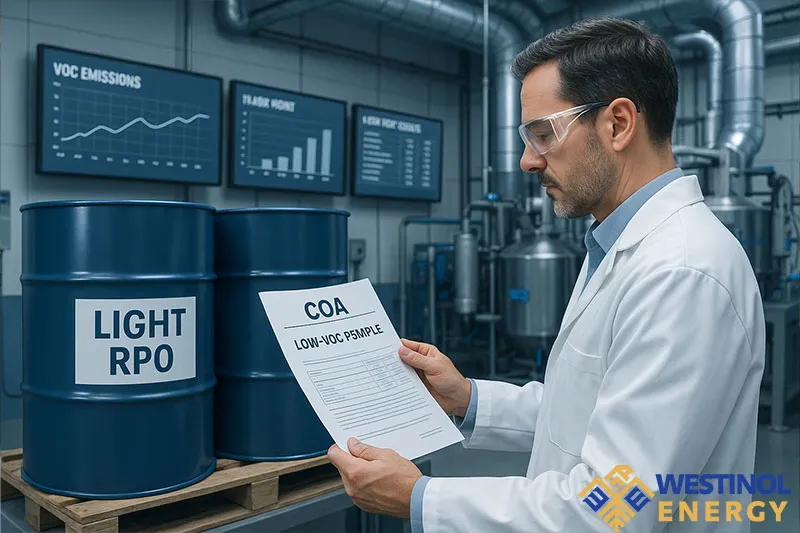
Each batch is tested and delivered with a COA. Custom sourcing and packaging (bulk, drum, flexi) are also available to reduce handling exposure.
Best Practices for QA/QC Teams
- Review RPO COA for sulfur and ash content
- Prioritize suppliers who meet ASTM D-series testing
- Use paraffinic or naphthenic RPO for low-emission processes
- Track batch variation to avoid unexpected emissions
Internal Links to Explore
- Compare Heavy vs. Light RPO Specifications
- Explore Base Oils for Clean Formulations
- Contact Our Technical Team for Emission-Safe RPO
Final Thoughts
For manufacturers facing VOC limits, the purity of your Rubber Process Oil matters more than ever. Sourcing high-quality, certified RPO helps you meet regulations, improve workplace air quality, and streamline audits.
Need to reduce VOCs at the source?
➡️ Contact Work and Energy’s tech sales team to get samples, COAs, and VOC-specific sourcing advice.
FAQs
1. Does aromatic RPO cause higher VOCs than paraffinic?
Yes. Aromatic RPOs have more volatile compounds and emit more during heating.
2. Can RPO emissions affect worker health?
Prolonged exposure to high-VOC RPOs may cause respiratory issues or headaches.
3. Is Light RPO always better than Heavy RPO for VOCs?
Not always — check the flash point and PAH levels. Purity matters more than viscosity.
Contact & Resources
📩 Email: info@westinol.com
🌐 Website: www.westinol.com
📞 Call: +971 58 599 2028
PDF Summary Download (Teaser)
Title: VOC-Safe RPO: A Guide for Compliance-Focused Manufacturers
Includes: Comparison tables, COA checklist, purity benchmarks, and contact for sourcing
➡️ Download PDF Guide